90gut
2A Inner-Dominant Passion Creator

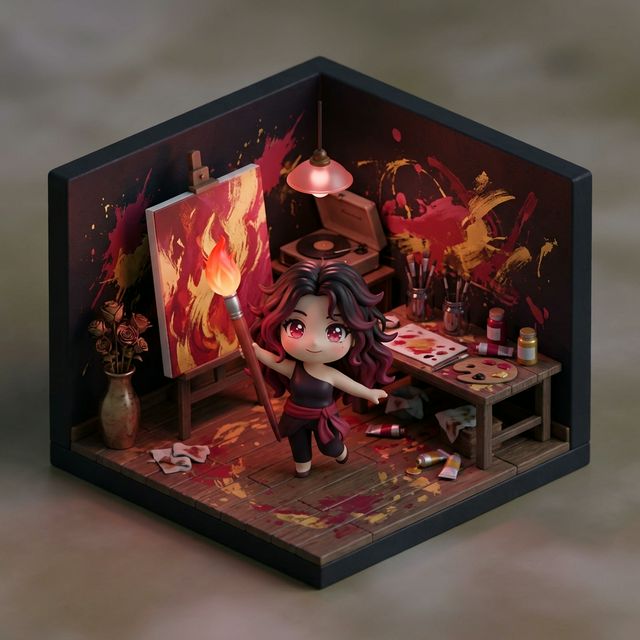
Passion Creator

Transmuting overflowing emotion into art

Your heart beats harder than most.

With an active ANS-Baseline (autonomic nervous system baseline), your emotional amplitude is large. You feel both joy and sorrow more deeply than others, and convert that intensity into creative energy.

As a Passion Creator, you transform what you feel directly into expression. Music, words, color, movement. Whatever the medium, your expression carries the power to move hearts.

Emotion is not weakness. It is the most human form of intelligence

Your heart beats hard because you're confronting the world at full force

Burnout is not the price of passion. It's the price of neglecting rest

The temperature of the flame is decided by the gut. Fix your diet, and the flame stabilizes.

Essence

High-intensity emotional rhythms transformed into creative drive

Your heart reacts to the world just a bit more intensely than others. With an active ANS-Baseline, your heart rate variability (HRV) pattern is distinctive, with the sympathetic nervous system tending toward dominance. Joy, sorrow, anger—all emotions hit at full volume. Some call this "too emotional," but more accurately, your "emotional output is simply larger."

With a high cortisol awakening response (CAR), you can run at full throttle from morning, but your energy tends to crash by evening. This is physiology, not willpower. Understanding this biological rhythm is the first step to riding yourself well.

The ability to convert emotional energy into creation is the Passion Creator's true essence. Anger becomes drive, sadness becomes empathy, joy becomes expressiveness. You cast raw emotional material into the form of art or work. This conversion ability is your most important talent.

Let's look more closely at this mechanism. Inside your body are two pedals belonging to the "autonomic nervous system": the accelerator (sympathetic nervous system) and the brake (parasympathetic nervous system). In your case, the accelerator is set to press harder from birth.

You can see this in your "HRV (heart rate variability)"—the fluctuation in the intervals between heartbeats. When the sympathetic system dominates, the rhythm becomes uniform; when the parasympathetic system dominates, it fluctuates healthily. Because you lean sympathetic-dominant, emotional waves translate directly into physical responses. That pounding heart when you're excited? That's this mechanism at work.

There's also a mechanism behind your morning energy. The "cortisol awakening response (CAR)" is a phenomenon where the stress hormone cortisol peaks about 30 minutes after you wake up. Your response is large, which is why you can hit the ground running. But think of it as "borrowing energy from the morning"—the tank runs low by evening. Once you understand your physiology, you can plan deliberate recharge breaks in the afternoon and make your energy last all day.

Strengths

Emotionally charged expression that shifts group energy fast

Expressiveness and influence are your two greatest weapons. When you speak from the heart, your words carry body heat. In presentations or daily conversation, your speech has the power to change your listeners' heart rates. This isn't technique—it's a physiological phenomenon where autonomic output rides on your words.

Your intuitive judgment is also noteworthy. Even when you can't explain it logically, your body tells you "this way." This embodied cognition is faster than conscious analysis and often more accurate.

Your ability to draw people in is also exceptional. Your passion is contagious. When the team is exhausted and you start speaking with fire in your eyes, the atmosphere transforms. This "power to change the energy of the room" is the essence of leadership itself.

Why do your words carry "body heat"? Here's the mechanism. The human brain contains cells called "mirror neurons" that unconsciously "replay" another person's emotions inside your own brain. When someone with high emotional output like you speaks, the listener's mirror neurons fire intensely. That's what creates the feeling of being "drawn in" by your words.

Your intuitive judgment has scientific backing through the "somatic marker hypothesis." Proposed by neuroscientist Damasio, this theory holds that bodily sensations—a churning in your chest, a heaviness in your stomach—serve as guides for decision-making. Because your sympathetic nervous system is highly sensitive, you're especially skilled at catching these "body signals." When your body says "this way" even though you can't explain it logically, it's this mechanism at work.

Your ability to draw people in is connected to "emotional contagion." Psychology research has shown that emotions spread from person to person like a cold. Moreover, the higher someone's emotional output, the stronger their "contagion power." When you speak with passion, the autonomic nervous systems of everyone in the room begin to synchronize. The power to change a team's atmosphere is born from this mechanism.

Challenges

Managing emotional surges, depletion cycles, and stimulation dependency

Large emotional waves mean deep valleys too. The exhaustion after a creative high, the depletion after pouring too much passion into something. These are not unavoidable costs but cycles to manage. What makes your flame sustainable is the art of planned rest.

Another challenge is dragging those around you too deeply into your emotional waves. What feels like "normal temperature" to you may be "way too hot" for someone else. You need the habit of consciously monitoring your emotional output level.

You also have low tolerance for "boredom." You feel stressed by unstimulating routines and unconsciously create drama. Social media "likes" and the next video pour gasoline into your reward circuit. Consciously create time to "cut off stimulation." A quiet room, screens off, just sitting. Beyond that boredom lies the real creative flame.

Let's understand the mechanism behind these challenges. The emotional "high" and "low" waves can be explained by the dopamine-cortisol cycle. When you're burning with passion, your brain's reward circuit releases large amounts of dopamine (the pleasure chemical). But dopamine has a "rebound"—after a large release, it temporarily depletes. This is the true identity of the crash that follows a creative high.

The challenge of overwhelming those around you also has a brain mechanism. The "emotional contagion" mentioned in the Strengths section works in reverse when uncontrolled. When you're irritated, that emotion spreads to the people around you. Psychology has a concept called "emotional labor"—when others constantly adjust to your emotional waves, it becomes a significant drain on them. Practicing "consciously lowering your emotional output" is essential. Specifically, the "6-6 breathing method"—inhaling for 6 seconds, exhaling for 6 seconds—provides immediate results.

The tendency toward "boredom intolerance" also has a brain mechanism. Your reward circuit has high dopamine sensitivity, so when stimulation is absent, it sends a "reward deficit" signal. Social media scrolling and impulse buying are quick ways to silence this signal, but repeating them builds "tolerance," requiring ever-stronger stimulation. This is the same mechanism as addiction. Deliberately creating time to "savor boredom" serves as a reset for your reward circuit.

Work & Aptitude

You shine brightest in work where emotion and creativity directly translate to value. Creative director, advertising planner, actor/performer, sales, event producer, entrepreneur, brand manager, musician. All of these are fields where "moving people's hearts" directly drives results.

In teams, the "spark plug" position is optimal. At the start of a new project, when team morale drops, your passion reignites everyone's engine. However, long-term routine work doesn't suit you. The smart strategy is to deliver maximum impact during a project's launch phase, then hand over the steady-state operation to another type.

Watch out for emotional burnout. Running on passion as fuel, you're slow to notice when you're running on empty. Set aside one "do nothing" day per week. Blocking "recharge day" on your calendar isn't laziness—it's the most productive investment.

Take the test for full details

Compatibility

Your energy resonates most with 3B (Soulfire Prophet). When your expressiveness combines with 3B's charisma, an enormous energy field forms that sweeps everyone in. Just being together amplifies each other's passion—a relationship with rare chemistry.

Compatibility with 7A (Intuition Adventurer) is also strong. 7A's optimism and curiosity give your passion new directions. Together, you naturally feel like "let's do something even more interesting."

On the other hand, with 1B (Sky Observer) and 6A (Immovable Guardian), you'll feel a temperature gap. 1B's composure may look like "coldness" to you, and 6A's steadiness may seem like "dullness." But this temperature difference is actually where the most learning happens. You can naturally absorb the "cool-down techniques" you lack from them.

Take the test for full details

Relationships

All-in passion that magnetizes people

In romance, you're the all-in type. When you fall, you leap with your whole being. That passion captivates, but it can also overwhelm. Remember that "love's ideal temperature varies by person." Pouring passion while respecting your partner's pace is the secret to lasting relationships.

In friendships, people naturally gather around you. But when you're down, you may feel trapped by the "always-energetic" image and unable to show weakness. A true friend is someone who stays beside you even when your flame flickers. Showing vulnerability is what makes friendship truly deep.

In family relationships, your rich emotional expression gives your family warmth. Especially your habit of celebrating milestones with full force—that will remain the most vivid color in your family's memories.

Let's look at romance through a brain-science lens. In the early stages of love, a substance called "PEA (phenylethylamine)" is released in large quantities. It produces feelings of alertness and euphoria, and people with high sympathetic output like you feel its effects more intensely. In other words, the reason you "dive in with everything" when you fall in love is because your brain is wired that way.

However, PEA's effects typically fade after 18 months to 3 years. What sustains a relationship after that is "oxytocin" (the hormone of trust and attachment). Oxytocin is released through physical touch and calm shared time. In other words, whether you can shift from passion's "high heat" to "steady warmth" determines the staying power of a relationship.

For friendships, the lens of "attachment theory" is helpful. People with rich emotional expression like you can have a tendency toward "anxious attachment"—a pattern of over-accommodating or hiding weakness out of fear of being abandoned. Constantly performing "the always-energetic version of you" keeps the autonomic nervous system perpetually on, leading to the burnout described in the Essence section. Showing vulnerability is also an act that activates the parasympathetic system.

Before facing someone important, try consciously taking 10 deep breaths. Inhale for 6 seconds, exhale for 6 seconds. That alone stimulates the vagus nerve, shifts the parasympathetic system into dominance, and gentles your emotional output. The best relationships are born from the best autonomic balance.

Health Wisdom

Your greatest health risk is "continuing to burn without realizing you're burning." With your sympathetic nervous system always on, the flame can burn through the night. If your jaw aches when you wake up, that's proof your autonomic system isn't switching off during sleep.

Start by fixing the gut. GABA, the neurotransmitter that calms intense emotions, is produced by gut bacteria. Miso, pickled vegetables, kimchi—at every meal. Consciously include soy products and bananas. Eating 30 or more plant types per week enriches the gut ecosystem.

Aerobic exercise (running, swimming) healthily discharges excess sympathetic excitement. However, intense evening workouts backfire—finish at least 3 hours before bed. Walking near water is especially powerful for you: the sound of waves synchronizes with alpha brain waves, cooling an overheated nervous system.

Take the test for full details

Growth Path

Your growth is a journey of learning "flame control." The first stage is "knowing the power of emotion." When you experientially learn that anger can become drive and sadness can become empathy, emotions become not enemies but partners.

The second stage is "the art of flame regulation." Not full-on or full-off, but adjusting output to the situation. Physical condition physically governs emotional output. When you fix your diet and reduce excess stimulation, the flame's temperature stabilizes.

The third stage is building "sustainable passion." Youthful passion blazes up in an instant and vanishes just as fast. Mature passion burns steadily, stoked with kindling over time. When you reach this stage, you possess both explosive power and long-term stamina.

Roughly every seven years, we reach an invisible turning point. For the flame type, it's the moment "how you burn changes." Finding new kindling and having the resolve to change the shape of your flame determines the next season.

Take the test for full details
Discover Your Type

Who matches well with this type?

Check compatibility →

Other Archetypes